KYA and clearing private assets: the acid test for operating models
KYA and clearing private assets: the acid test for operating models
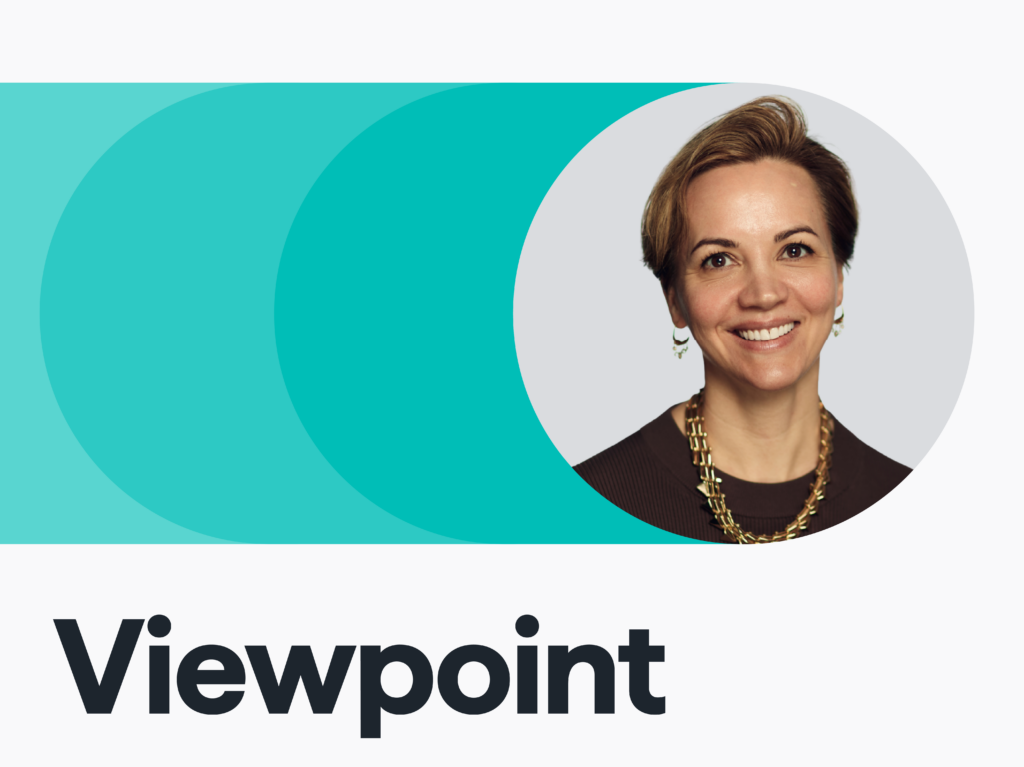
Clair Turketo, Managing Director, Client Solutions
Download our Know Your Assets report
Know Your Asset (KYA) is now well established in principle. The challenge for fund managers lies in applying it under real-world conditions. And, in private markets, that challenge is amplified by the simple fact that the information you need is often the hardest to access.
This is where operating models are tested – in execution. Information is limited as private companies don’t need to publish their financials. Documentation is inconsistent as corporate governance is less of a priority than in public markets. Engagement is often slow, across language barriers, time zones and regulatory regimes.
And yet expectations continue to rise: for transparency, defensibility and fast deal flow.
Asset-level due diligence is already consuming the lion’s share of time and resource. According to our recent KYA report, 59% of managers spend between 50% and 75% of their AML due diligence effort on assets. In private markets, that pressure intensifies, homed in on the challenge of clearing the asset itself.
The information gap
The issue is not just that information is harder to access. It’s that fund managers are expected to reach clearer conclusions with less of it. In private markets, financial disclosure is limited and ownership structures are often layered across jurisdictions. What data is available may be partial or require validation.
At the same time, regulatory expectations are expanding towards a deeper understanding of asset provenance, beneficial ownership and indirect exposure. Our recent KYA research shows that 96% of investors and 89% of fund managers expect regulatory complexity to increase over the next two years.
The result is a structural imbalance where regulators are pushing for a complete and evidenced view of risk, but the information required remains hard to obtain and process.
Corporate governance is downplayed
Even where information exists, validating it can be difficult. Corporate governance is not always a priority for private entities. Documentation may be incomplete, inconsistent or not maintained in a way that supports structured due diligence. Legal records, ownership data and financial information often require interpretation, rather than simple verification.
This places greater emphasis on the ability to interrogate documentation – not just collect it. Understanding what sits behind a structure, and whether it aligns with the risk profile presented, is now a core expectation.
Engagement becomes a bottleneck
Outreach to private companies – or their legal counsel – can take time and persistence. Differences in time zones, languages and local practices can all contribute to delays. In many cases, counterparties are not familiar with AML processes or the level of detail required, meaning requests for information need to be explained, clarified and followed up.
This creates friction at a critical point in the deal process. And because asset clearance sits directly on the execution path, that friction is immediately visible.
From initial flags to enhanced diligence
Sanctions hits, PEP connections and adverse media are common initial flags from screening. In private markets, these can be more difficult to assess because of the limited public information and fragmented data sources.
Clearing these flags frequently requires enhanced due diligence: deeper identity verification, additional data collection and more detailed analysis. This extends timelines and increases the need for specialist expertise to make judgement calls, particularly where risk is not clear-cut.
Handling sensitive information securely
The process also raises practical challenges around data handling. Clearing private assets requires access to highly sensitive information, including financial records, ownership structures and legal documentation. Managing that information securely is essential, both from a regulatory perspective and to maintain trust with counterparties.
Traditional approaches – email exchanges, disconnected systems and manual tracking – are increasingly difficult to sustain at scale. They introduce risk, reduce efficiency and make it harder to maintain a clear audit trail.
Technology forms part of the solution
Many firms are turning to integrated technology to address these challenges. As the KYA report highlights, automation and integrated workflows are improving data collection, screening and monitoring – reducing manual effort and improving consistency.
Adoption is already well underway. Some 63% of fund managers say that between half and three-quarters of their operating model is now technology-driven. But the transition is far from complete. At the same time, 43% report that more than half of their KYA and AML processes remain stubbornly manual.
Secure digital platforms can streamline outreach, standardise documentation requests and provide a controlled environment for handling sensitive information. They are increasingly critical to managing scale and maintaining auditability. But technology alone is not sufficient.
Private assets require interpretation. Ownership structures, jurisdictional nuances and incomplete data mean that expert oversight remains essential. The most effective models combine automated workflows with specialist review – balancing scale with control.
Designing operating models that can deliver KYA
Clearing private assets is not a peripheral task. It is a core operational capability – one that directly affects deal timelines, risk management and regulatory confidence.
Operating models need to be designed with effective KYA in mind: able to handle incomplete information, manage complex engagement and process sensitive data securely, while maintaining consistency and pace. This is where the gulf between expectation and execution becomes most visible.
Explore how the industry is approaching KYA – and how operating models are evolving to meet increasing complexity – download our Know Your Assets report.
Carnversations

Asset management, ETF & capital markets veteran Keshava Shastry joins Carne Group

Navigating the semi-liquid distribution landscape
Preparing for UK CCI: Timeline, impact and practical next steps

GatherRound 2026

The new compliance partnership: AI, tech and the evolution of humans in the loop

AltsPath 2026
Product strategy comes first in Europe’s new private markets landscape

Private Guide