AltsPath 2026: Unlocking the Global Growth in Alternatives

AltsPath 2026: Unlocking the Global Growth in Alternatives
Hosted by Carne, PwC, and Simpson Thacher
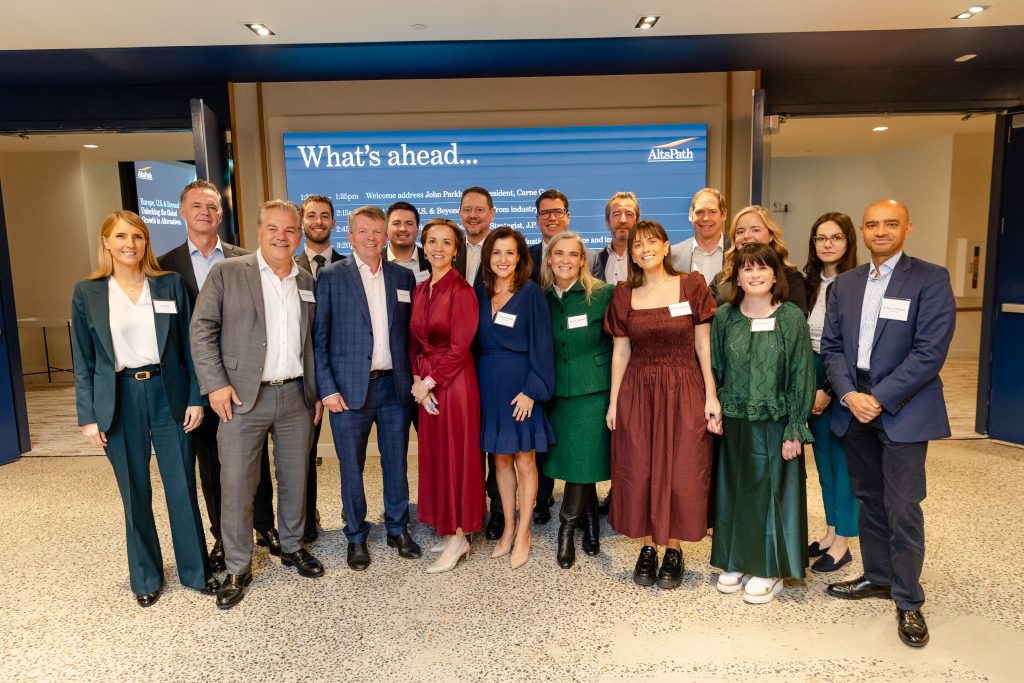
Under the theme “Europe, U.S. & Beyond: Unlocking the Global Growth in Alternatives”, AltsPath 2026 brought leaders from across asset management, wealth, regulation, fund formation and operations together in New York to explore what it will take to broaden access to private markets while protecting investor trust.
Hosted by Carne Group, PwC and Simpson Thacher, the event brought together senior voices from across the alternatives ecosystem. The programme examined the macroeconomic case for diversification, the evolution of private market products, the regulatory and governance agenda, and the practical realities of reaching new investors across regions and channels.
There were several themes driving discussions on the day.
1. Growth requires clearer strategic choices
Private market managers have more routes to growth than ever before, including new geographies, wealth channels, evergreen vehicles and defined-contribution markets. But opportunity alone is not a strategy. Managers need a clear view of the investors they want to serve, the capabilities they are prepared to build and really understand how potential new products could impact the wider business. Trying to be everything to everyone risks weakening both investment focus and client proposition.
2. Product design is becoming more investor-led
The traditional distinction between closed-ended institutional funds and evergreen wealth products is becoming less useful. Institutional and private wealth investors increasingly use a mix of structures. The more relevant question is whether a vehicle’s liquidity, investment horizon, governance and reporting model fit the underlying assets and the needs of its target investors. Product innovation is increasingly about matching strategies to the right investors rather than creating entirely new structures.
3. Semi-liquid does not mean fully liquid
As evergreen and semi-liquid products scale, managers, distributors and advisers must communicate liquidity terms with precision. Periodic dealing, redemption limits, gates and lock-ups are deliberate features designed to align investor access with less liquid assets. Clear expectations at the point of sale, supported by consistent communication throughout the investment lifecycle, are essential to maintaining trust when markets become more challenging.
4. Investor education is now part of the product
Broader access creates a longer chain between the manager and the end-investor. That places greater weight on the knowledge of sales teams, distribution platforms and financial advisers. Education cannot be treated as a launch-only exercise. It needs to explain the investment strategy in plain language, set out how liquidity is accessed, describe the potential risks and make clear how the investment may fit within a diversified portfolio.
5. Valuation is becoming more frequent, transparent and consequential
Valuation has moved beyond a periodic reporting exercise. In evergreen and semi-liquid structures, subscriptions and redemptions may take place using those values, making consistency, governance and documentation increasingly important. Managers are responding with more frequent valuation cycles, stronger back-testing and greater use of independent challenges or validation. Investors and regulators are also asking more detailed questions about methodology, oversight and the evidence supporting decisions.
6. Global distribution is an operating model, not simply a sales plan
Entering a new market requires more than access to a distribution partner. It brings additional fund structures, regulatory requirements, service providers, onboarding processes, tax documentation, anti-money-laundering checks and data governance. Luxembourg continues to feature prominently as a gateway for international distribution, but the wider lesson is that managers must design the operational infrastructure alongside the product and commercial strategy, not after launch.
7. Scale will favour managers that combine innovation with discipline
The next stage of private markets growth will be shaped by defined-contribution access, hybrid structures, continuation vehicles, tokenisation and more efficient digital onboarding. At the same time, managers face pressure from regulatory scrutiny, technology disruption, fundraising competition and industry consolidation. The firms best positioned to succeed will be those that innovate without compromising governance, investor communication or operational resilience.
A market moving from access to execution
AltsPath 2026 showed an industry moving beyond the question of whether private markets should reach a broader investor base. The focus is now on how to do so responsibly and at scale.
The opportunity to broaden access to private markets is significant. Capturing it will require managers to combine product innovation with operational discipline, investor education and robust governance. Those that can balance growth with trust will be best positioned to succeed across Europe, the U.S. and beyond.









Carnversations
Trends and opportunities in ETF product development

Carne Group recognised as Luxembourg’s largest third-party ManCo by Monterey Insight

A semi-liquid fund is only as strong as its operating model

A new season for outsourcing – the shift from operators to orchestrators

Land and expand: finding the right model for European private markets growth

Domicile spotlight: how Portugal is supporting the European distribution opportunity
Five regulatory developments to know this quarter

The future of fund distribution – Luxembourg Lunch & Learn